


Food Safety Guide: Vacuum Packaging Does NOT Mean Long Shelf Life
Many people have had this experience.
While traveling, you find some delicious cooked food at a local shop. To take it home safely, the seller helps vacuum seal the food, and you believe it will stay fresh for a long time.
However, after arriving home, you notice the package has swollen, smells sour, or the food has already spoiled.
You may wonder:
Isn't vacuum packaging supposed to keep food fresh for a long time?
The truth is that different packaging methods have completely different shelf lives.
Whether food can be stored for a long time does not depend only on vacuum sealing, but also on sterilization, temperature control, packaging environment, and microbial control.
This article explains the most common food packaging methods, why food spoils, and how to store vacuum-packed food safely.
Common Food Packaging Methods and Their Shelf Life
Cooked food on the market is usually packed in four common ways:
Direct packaging
Fresh-lock packaging
Factory vacuum packaging
On-site vacuum sealing
The shelf life difference between them can be huge.
The key factor is whether the packaging blocks the conditions that microorganisms need to survive.
1. Direct Packaging (Simple Packing Without Protection)
This is the most common packaging used in street food, deli shops, and fresh markets.
The food is placed directly into a plastic bag or container without sterilization or sealing.
Features:
No vacuum
No sterilization
No temperature control
Easy exposure to bacteria
Recommended storage time:
Room temperature: 2–3 hours
Hot weather: within 1 hour
This packaging does not extend shelf life.
It is only suitable for immediate consumption.

2. Fresh-Lock Packaging (Cold Chain Packaging)
Fresh-lock packaging is usually done in a clean factory environment and combined with cold chain storage.
Features:
Clean production workshop
Sealed packaging
Refrigerated storage (0–4°C)
Controlled microbial level
Shelf life:
Refrigerated: about 5–7 days
Some products: up to 10 days
Common use:
Supermarket cooked food
Chain food brands
Short-distance transport
Fresh-lock packaging slows down spoilage but does not stop it.

3. Factory Vacuum Packaging (Vacuum + High Temperature Sterilization)
This is the most reliable method used for long shelf life food products.
Typical process:
Vacuum sealing
High temperature sterilization
Hermetic packaging
Seal inspection
Cooling storage
Features:
Oxygen removed
Most microorganisms killed
Strong barrier packaging
Can be stored at room temperature
Shelf life:
Room temperature: 9–12 months
Refrigerated: 1–6 months
Used for:
Ready-to-eat food
Meat products
Retort food
Supermarket packaged food
However, high temperature sterilization may affect taste:
Meat may become dry
Texture may change
Gel-like protein may appear
This is caused by protein structure changes during heating.

4. On-Site Vacuum Sealing (Most Misunderstood)
Many people think vacuum sealing always means long shelf life.
This is not correct.
On-site vacuum sealing is not the same as factory vacuum packaging.
| Item | Factory Vacuum | On-site Vacuum |
|---|---|---|
| Sterilization | Yes | No |
| Clean environment | Yes | No |
| Cold chain | Yes | Not always |
| Long shelf life | Yes | No |
Real storage time for on-site vacuum sealed food:
Refrigerated (0–4°C): 5–7 days
Room temperature: 1–2 days
If exposed before sealing: shorter
Important factors:
Freshness
Packaging timing
Storage temperature
If food has been exposed to air for a long time, bacteria may already be inside.
Vacuum sealing cannot reverse contamination.


Why Does Food Spoil?
Food does not spoil simply because of time.
The real reason is microorganisms.
There are three main types of microbes.
Aerobic Bacteria
Need oxygen to grow
Examples:
Mold
Many spoilage bacteria
Vacuum packaging can slow them down.
Anaerobic Bacteria
Do not need oxygen
Examples:
Clostridium botulinum
Clostridium perfringens
These bacteria may grow faster in vacuum conditions.
This is why vacuum sealing alone is not safe.
Low temperature is also required.
Facultative Bacteria
Can grow with or without oxygen
Examples:
E. coli
Salmonella
These are very common in food.
Food safety depends on:
Temperature
Time
Hygiene
Sterilization
Packaging barrier
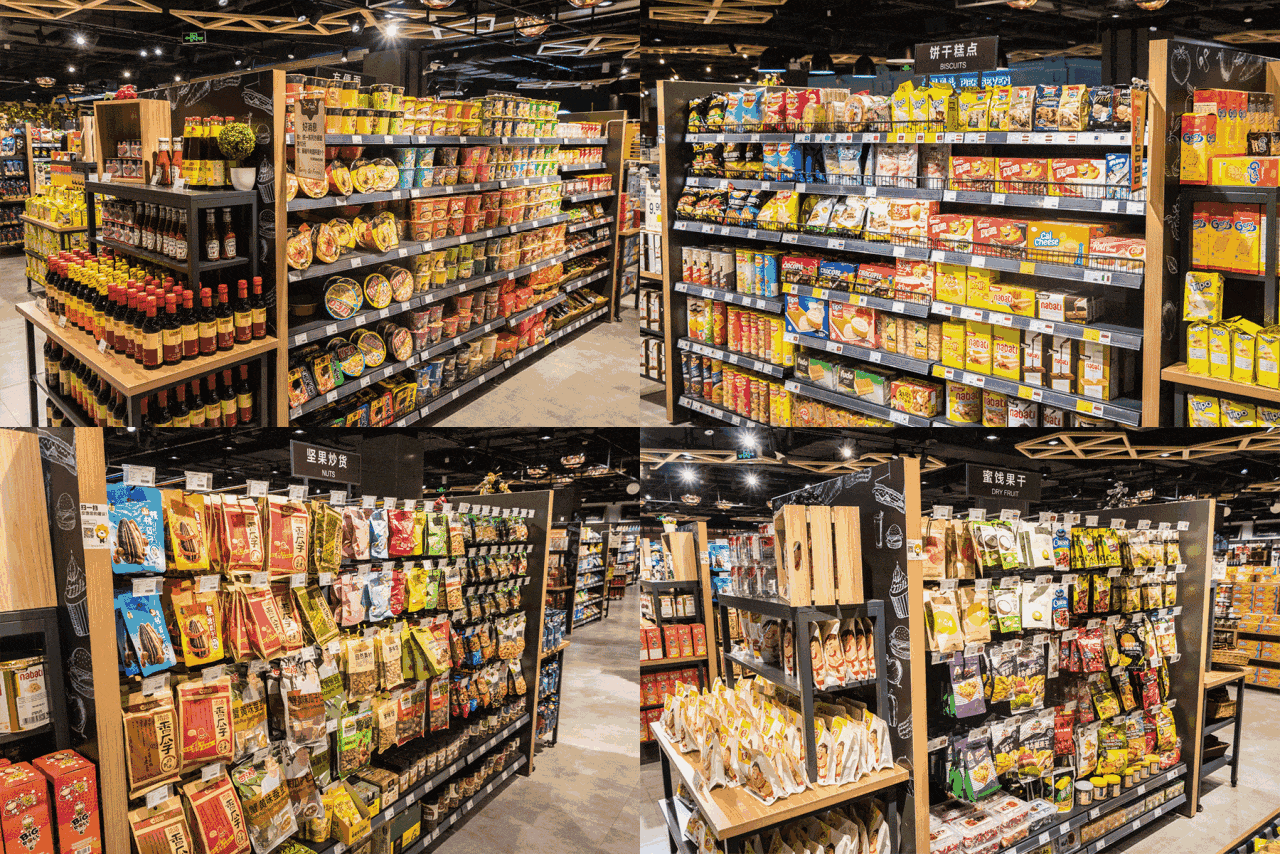
Why Supermarket Packaged Food Lasts So Long
Many packaged foods in supermarkets have shelf life of 6–12 months.
This is because of:
Vacuum + High temperature sterilization + Barrier packaging
Typical process:
Vacuum sealing
High temperature sterilization
Clean packaging
Seal inspection
Controlled cooling
This kills most microorganisms.
But not all food is completely sterile.
Shelf life means safe within a controlled range.
How Long Can Fresh Vacuum-Sealed Food Last?
The answer depends on one detail:
Packaging timing
If vacuum sealed immediately after cooking:
Refrigerated: 5–7 days
If food stayed at room temperature before sealing:
1–2 days
If not refrigerated:
May spoil the same day
Recommended practice:
Choose freshly cooked food
Vacuum seal immediately
Use ice packs for transport
Refrigerate as soon as possible
Can Spoiled Food Be Safe After Heating?
No.
If food shows any of these signs:
Swollen package
Sour smell
Sticky surface
Mold
Dark color
Gas inside bag
Do not eat.
Some bacteria produce toxins.
These toxins may survive heating.
Even boiling may not make the food safe.
Eating spoiled food may cause:
Food poisoning
Vomiting
Diarrhea
Intestinal infection
How to Safely Eat Vacuum Packed Food
Follow these rules:
✔ Keep refrigerated
✔ Check production date
✔ Heat before eating
✔ Eat after opening
✔ Do not reheat repeatedly
Recommended heating methods:
Steaming
Boiling
Microwave
Garlic, ginger, and onion may help reduce bacteria but cannot replace sterilization.
Repeated cooling and heating may cause growth of dangerous bacteria such as:
Clostridium perfringens
This can cause severe diarrhea.
Packaging Can Delay Spoilage, But Cannot Stop It
Food preservation is a race against time.
Packaging can:
Reduce oxygen
Block moisture
Slow bacteria growth
Protect from contamination
But no packaging can make food last forever.
Safe appearance does not always mean safe food.
Choose fresh food.
Store properly.
Eat in time.
Food safety depends on both packaging technology and correct storage.


